
One Line Games: Puzzle Fun
JoyPop GamesTrivia
3.94.00 Reviews
- Version
- 1.3.1
- Installs
- 5.00M
- Age Rating
- Everyone
Screenshots
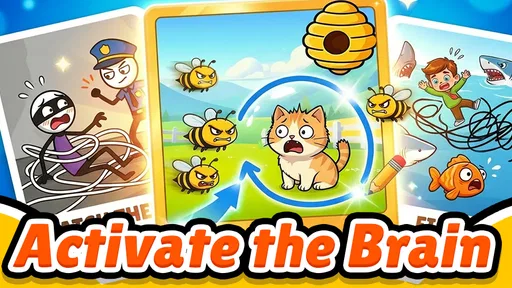
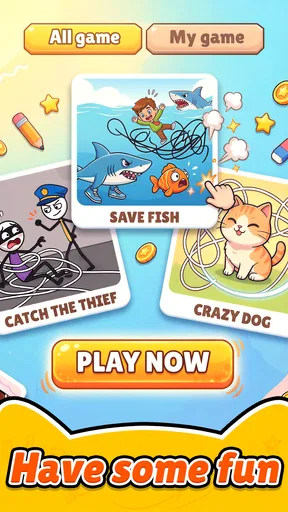
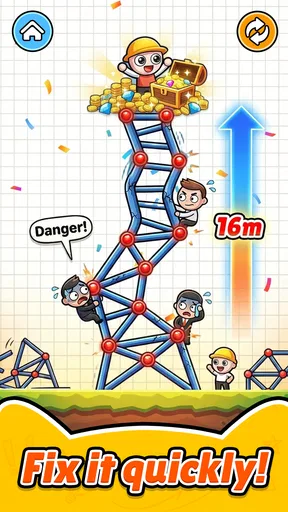
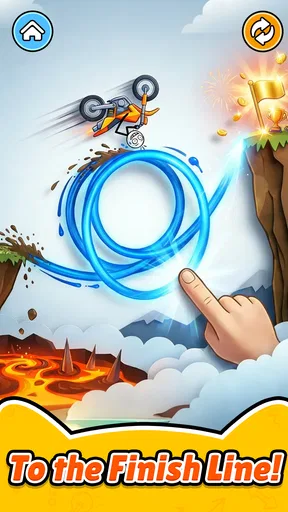
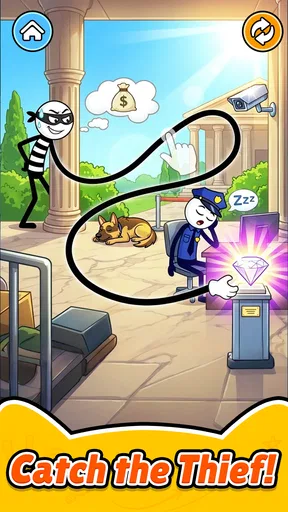
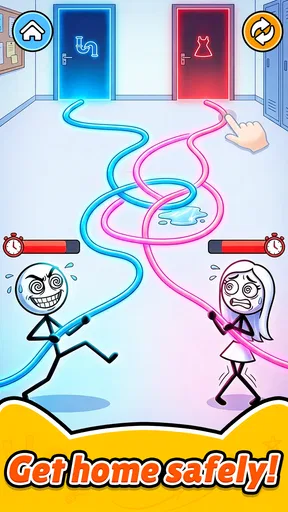
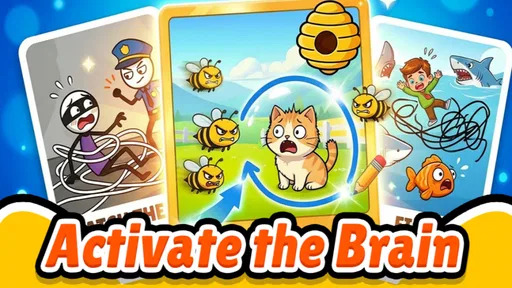
Our Review of One Line Games: Puzzle Fun
 Analysis by Appyee
I spent time with One Line Games: Puzzle Fun as a quick-play trivia game built around drawing a single line. That simple starting point makes it easy to understand almost immediately: you look at the challenge, decide how to connect what is on screen, and try to finish the drawing without turning a short puzzle into a frustrating tangle. It is the kind of game I can open for a few minutes when I want something active enough to hold my attention but calmer than a fast action game.
JoyPop Games keeps the central idea deliberately approachable. Rather than asking me to learn a complicated control scheme, the game makes the line itself the main conversation between the player and the puzzle. That gives it a relaxed feel, although the simplicity also means the quality of each individual challenge matters a lot. When a puzzle feels clear, the experience is satisfying. When the objective feels less obvious, the same minimal design can leave me wondering whether I made a mistake or simply misunderstood the intended route.
How the early goals shape the first sessions
The early appeal comes from having one obvious task in front of me: complete the drawing with a single continuous gesture. I do not need a long tutorial to understand the basic interaction, and that makes the game suitable for casual players who may not usually spend time with puzzle titles. It also works well for younger players because the content rating is Everyone and the basic premise is easy to explain without relying on complicated language.
My first useful tip is to resist dragging immediately. I get better results when I pause for a moment and inspect the whole shape before touching the screen. The natural impulse is to follow the nearest visible point, but that can lead into a dead end. Looking for the likely starting point, the tightest corner, and the final connection first turns the opening seconds into a small planning exercise rather than a trial-and-error swipe.
That planning habit is more important here than speed. One Line Games: Puzzle Fun is not at its best when treated like a reflex challenge. I enjoy it more when I use the first attempt to understand the structure and the second attempt, if needed, to execute the route cleanly. This also gives the game a gentle mental rhythm: observe, commit, and see whether the line holds together.
The early goals are therefore modest but useful. I am not chasing a large narrative objective or building a character. I am trying to solve the current drawing, learn how the game expects me to read its shapes, and maintain enough concentration to avoid an unnecessary restart. That is a good match for short sessions, but players looking for a strong story, collectible heroes, or a large strategic layer will find the opening deliberately light.
What progress feels like during a short session
The clearest progress signal is the act of completing one challenge and moving on to another. That sounds basic, but it suits the game’s compact design. I can tell immediately whether I have understood the puzzle, and a successful line gives a small sense of closure without asking me to remember a complicated set of rules. For a break between other tasks, that clean finish is more valuable than a long progression screen.
Still, the game’s progression depends heavily on the puzzles themselves. There is no point in adding visual decoration if the underlying route is not interesting, so I pay attention to whether each challenge makes me reconsider the path. The strongest moments are not the ones where I draw quickly; they are the ones where the shape initially looks obvious, then forces me to rethink the order of the connections.
I also found that progress can be measured by my own improvement. At first, I tend to focus on the visible destination. With more practice, I start reading the entire outline and anticipating where a continuous line could become trapped. That is a meaningful skill change, even when the game does not turn it into a formal achievement. Players who like self-improvement through repetition may appreciate this quieter form of advancement.
One practical workflow helps keep the experience enjoyable: I treat a puzzle as a visual problem before treating it as a drawing problem. I identify the route, then make the gesture. If I make several careless attempts in a row, I stop for a moment rather than forcing the same approach. This prevents the relaxed concept from becoming a cycle of impatient swipes, and it makes the game better suited to winding down in the evening or filling a short wait.
Where the difficulty curve works and where it can feel uneven
The difficulty in a one-line puzzle is not only about the number of turns. It comes from how clearly the shape communicates its intended route. A compact design can be more demanding than a complicated-looking one if the wrong first move blocks the rest of the drawing. I like that the challenge can come from planning rather than from fast fingers, but it also means a small ambiguity can feel disproportionately annoying.
For new players, I recommend using a slow, deliberate gesture instead of trying to beat the puzzle quickly. Precision matters more than pace, and rushing makes it harder to tell whether the problem was the chosen route or the movement itself. On a smaller phone screen, this approach is especially helpful because a confident but careless swipe can obscure the shape while it is being drawn.
The game is most comfortable for people who enjoy light spatial reasoning. It is less suitable for someone who wants a steadily escalating brain-training experience with clearly explained grades, timed targets, or detailed performance analysis. The line mechanic can produce thoughtful moments, but it does not automatically create deep strategy. Its challenge has a focused ceiling, and that is part of both its charm and its limitation.
I would also avoid judging the whole experience by a single difficult puzzle. The right response is to inspect the route again and consider whether the starting point is actually the one that first catches the eye. In this type of game, the visual entrance can be misleading. That small distinction gives experienced players an advantage, but it may not be obvious to someone opening the game for the first time.
How the pacing encourages another round
The pacing is built around quick resolution rather than long commitment. I can pick up the game, solve a drawing, and put it down without losing the feeling that I made progress. That makes it a natural choice for a commute, a short rest, or the few minutes before an appointment. It does not demand the attention span of a story game, and I never feel that I need to reserve a whole evening for it.
At the same time, short puzzles can create a familiar retention pressure: after finishing one, I am tempted to try just one more because the next challenge appears to be equally manageable. That loop works when the puzzles vary enough in how they make me think. It becomes weaker if several challenges feel like minor adjustments of the same route. For me, the game’s long-term appeal depends more on the freshness of the shapes than on the basic act of drawing.
The free entry point helps with experimentation. I can install it without paying up front and decide whether the one-line format fits my taste. In-app purchases are listed at $5.99 per item, so I would approach any optional spending carefully and first establish whether the free experience already gives me enough variety. A casual puzzle game should remain comfortable as a small break; I would not spend simply because I felt pushed to keep pace.
That is also why the game may not suit players who dislike interruptions or any form of purchase pressure in free games. Even when the core interaction is pleasant, the overall experience is judged by how smoothly a player can continue from one challenge to the next. Anyone who wants a completely minimalist puzzle tool with no commercial layer may prefer a paid alternative, provided its design and pricing are a better personal fit.
Who will enjoy it most in everyday use
I can easily imagine opening this game while waiting for a friend at a café. I would solve a few drawings, stop when the conversation begins, and return later without needing to reconstruct a complicated story or strategy. The same pattern works during a short break at work, although I would keep the sound and attention demands in mind if other people are nearby. Its main strength in that situation is the low commitment of each attempt.
It is also a reasonable choice for families looking for a simple, non-violent puzzle activity. The Everyone age rating makes the audience broad, but adults should still guide younger children toward patient observation rather than repeated random swiping. That turns the game into a small exercise in planning: ask what route might work, try it, and explain why a different starting point could be better.
Players who prefer trivia in the traditional question-and-answer sense should set expectations carefully. This is categorized as a trivia game, but its actual appeal comes from solving visual line challenges rather than recalling facts. If I want quizzes about history, science, or general knowledge, I would choose a conventional quiz app instead. If I want a light puzzle that gives my hands and eyes something to do, this title is the more relevant option.
Likewise, dedicated puzzle fans may find the presentation too straightforward if they are searching for elaborate logic systems. A game with grids, layered rules, or a campaign map would offer more depth and a stronger sense of mastery. One Line Games: Puzzle Fun is better viewed as a focused casual diversion: its value comes from accessibility, quick feedback, and the small satisfaction of finding a workable route.
Device expectations, audience, and practical details
The game is free to start, and its minimum operating-system requirement is Android 7.0, which keeps it accessible to many older Android devices. The current version is 1.2.1, so I would install that version rather than relying on an outdated copy if the platform offers an update. These details matter most for people using an older phone or deciding whether the game is suitable for a shared family device.
Its reach is already substantial, with over a million installs, while the average rating sits at 3.9 from around one thousand ratings. I read that combination as a sign of broad curiosity and a generally workable experience, not as proof that every player will enjoy it. The game’s narrow premise explains why reactions can differ: people who like quick visual puzzles may find it calming, while players expecting a richer trivia package may feel that it is too limited.
JoyPop Games has kept the idea easy to describe, but the real test is whether the moment-to-moment challenges remain readable and satisfying. I would judge the game on that basis rather than on its install count. A large audience can show that the concept is approachable; it cannot replace personal fit, especially when the game asks for repeated attention to a single interaction.
One small accessibility consideration is the importance of visual clarity and touch precision. Because the entire experience revolves around following a line, players with difficulty distinguishing shapes or controlling a narrow gesture may find it less comfortable than a button-based quiz. A larger screen can make route planning easier, while a small display may reward slower movements. That is not a flaw unique to this title, but it is central to deciding whether this particular format works for you.
The progression verdict after extended play
My overall view is that the progression succeeds when I want a calm sequence of compact goals, not when I want a deep game structure. Completing a drawing provides immediate feedback, and the next challenge gives me a natural reason to continue. The pacing is strongest in short bursts, where the simplicity feels refreshing instead of repetitive.
The main trade-off is that the game’s retention depends on puzzle variety and clear difficulty growth. I would not choose it for a long, uninterrupted session unless I already knew that the visual challenges were varied enough for my taste. There is no need to force a marathon: the design is more convincing as a game I revisit throughout the day than as a title that must occupy all my free time.
My recommendation is to try it if you want a free, low-pressure line puzzle that starts quickly and rewards patience. Before considering an in-app purchase, I would first test how many sessions I can enjoy from the basic experience and whether the challenge curve feels fair on my device. That simple check protects the game’s biggest benefit: it should feel like a relaxing mental reset, not another obligation.
For me, One Line Games: Puzzle Fun lands in a useful middle ground. It is more interactive than passively scrolling, gentler than competitive games, and easier to approach than a complex logic title. I would recommend it to a friend who likes visual puzzles and wants something uncomplicated for spare moments. I would point a trivia enthusiast toward a question-based alternative, and I would suggest a deeper puzzle game to anyone who needs layered strategy. Within its intended space, though, the one-line idea is clear, accessible, and pleasant when played at its own unhurried pace.
Privacy and Permissions
See what permissions an app requests and how it handles your data.
- Wi-Fi connection information
- view Wi-Fi connections
- Other
- view network connections, full network access, reorder running apps, control vibration, prevent device from sleeping, Google Play license check
Verdict
Strengths of One Line Games: Puzzle Fun
- Simple one-line puzzles are easy to learn and play anywhere.
- Short levels make it ideal for quick breaks or casual sessions.
- Increasing difficulty keeps the challenge engaging over time.
- Minimalist visuals help keep attention on the puzzle solution.
- Works well for players who enjoy logic and pattern challenges.
Limitations of One Line Games: Puzzle Fun
- Some puzzles may feel repetitive after extended play sessions.
- Later levels can become frustrating without clear solution hints.
- Ads may interrupt gameplay, depending on the version installed.
- The minimalist presentation offers limited visual variety.
- Players seeking action or story-driven gameplay may find it basic.
Other Releases by JoyPop Games
View All
Beat Tiles 2: Piano Master
Music3.7

Arrow Way: Tap Away Puzzle
Trivia4.8
Similar Picks in This Category
View All
Millionaire 2026 Quiz & Trivia
Quiz & Trivia Games by Submarine Apps4.5

Brain Test 2: Tricky Stories
Unico Studio4.7

Trivia Crack: Brain Quiz Games
etermax4.4

QuizzLand. Quiz & Trivia game
Quiz & Trivia Games by Mno Go Apps4.8

Brain Test: Tricky Puzzles
Unico Studio4.7

Logo Quiz
bubble quiz games4.5
Frequently Asked Questions
What is One Line Games: Puzzle Fun?
One Line Games: Puzzle Fun is a casual brain-training game based on drawing a single continuous line. Each level presents a shape, pattern, or puzzle that must be completed without lifting your finger or tracing the same section incorrectly. The early stages are simple, but later puzzles require more planning, visual awareness, and patience. It is designed for short play sessions and does not require previous puzzle-game experience.
How do you play One Line Games: Puzzle Fun?
To play, touch the starting point and drag your finger across the screen to connect the required points or complete the displayed figure in one uninterrupted movement. The main challenge is deciding the correct route before you begin, because an incorrect turn can force you to restart the level. As you progress, the layouts become more complicated, making careful observation more important than quick reactions.
Is One Line Games: Puzzle Fun suitable for children and adults?
The game is generally suitable for both children and adults because its controls are easy to understand and its puzzles do not depend on fast reflexes, reading-heavy instructions, or complex controls. Younger players may enjoy the visual challenge, while adults can use it as a relaxing mental exercise. However, difficulty and advertising content can vary, so parents should review the app’s age rating and available settings before allowing unsupervised play.
Does One Line Games: Puzzle Fun work offline?
Many of the basic one-line puzzles can usually be played without a constant internet connection once the application and its required content have been installed. Offline availability may depend on the version, advertising system, and whether a feature needs online data. If you want to play while travelling or without mobile data, it is best to test several levels in airplane mode and check whether hints, rewards, or advertisements remain accessible.
Is One Line Games: Puzzle Fun free to download and does it contain ads?
One Line Games: Puzzle Fun may be available as a free download, but free access commonly comes with advertising and optional in-app purchases. Ads can appear between levels or when you request extra help, while purchases may be offered for removing advertisements, unlocking content, or obtaining hints. Before downloading, check the current store listing for pricing, permissions, subscription details, and the exact purchase options available on your Android or iOS device.
Play our best games!


